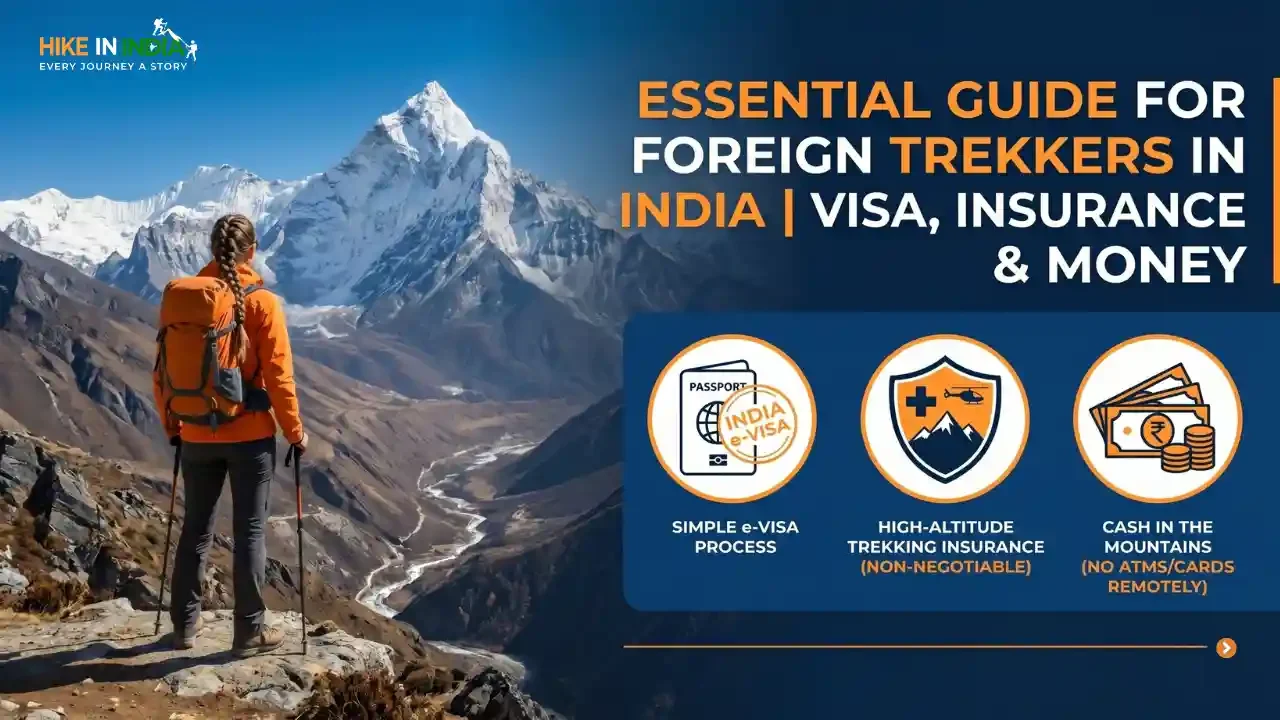
Essential Guide for Foreign Trekkers in India

The Indian Himalayas offer some of the most raw, spiritually uplifting, and visually stunning trekking routes in the world. From the lush meadows of Dayara Bugyal to the thrilling crossovers of Hampta Pass, the mountains here are calling out to conscious travelers globally.
However, trekking in India as an international traveler comes with a unique set of logistical challenges. Unlike regular tourist destinations, the high-altitude remote regions demand specific preparation. If you are planning an expedition with us at Hike in India, here are the three most critical things you need to sort out before boarding your flight.
Navigating the Indian Tourist Visa (e-Visa)
Getting a visa to India is actually a very straightforward process for most nationalities, thanks to the e-Visa system. However, first-time travelers often fall prey to expensive third-party scam websites.
Here is what you need to know:
- The Official Portal: Always use the official Government of India website: indianvisaonline.gov.in – Any other website claiming to expedite your visa is a third-party agent charging unnecessary premium fees.
- Processing Time: The e-Tourist Visa (available for 30 days, 1 year, or 5 years) is typically processed within 72 hours, but we recommend applying at least 3-4 weeks before your travel date.
- Documentation: You will need a digital photograph (passport size) and a scanned copy of your passport’s bio page.
- Pro Tip: Keep a printed copy of your approved Electronic Travel Authorization (ETA) with you at all times during your journey.
High-Altitude Travel & Evacuation Insurance
This is a non-negotiable aspect of trekking in the Himalayas. Many international trekkers assume their standard international travel insurance or credit card insurance will cover them in the mountains. It usually does not.
Standard travel insurance policies often have an altitude cap, typically voiding coverage if you go above 3,000 meters (approx. 10,000 ft). Most Himalayan treks, including beginner-friendly ones, cross this altitude.
What you need:
- Specific Altitude Coverage: You must purchase a policy that explicitly covers trekking up to 4,000 meters (for moderate treks) or 6,000 meters (for advanced expeditions and passes).
- Helicopter Evacuation: The policy must include emergency medical evacuation. The Himalayas are remote, and in case of severe altitude sickness (AMS) or injury, a helicopter airlift is the only fast way out.
- Trusted Providers: We highly recommend specialized adventure insurers like World Nomads or Global Rescue. They understand the logistics of high-altitude mountaineering and have reliable networks for emergency response in India.
Money Matters: Cash vs. Cards in the Mountains
India has gone through a massive digital payment revolution. If you visit cities like Delhi, you will see locals paying for a cup of tea by scanning a QR code using UPI (Unified Payments Interface). However, as a foreign national in the high mountains, you need a different strategy.
The Reality of Payments for Foreigners:
- UPI Limitations: While UPI (like Google Pay or PhonePe) is available everywhere in India, setting it up currently requires an Indian bank account and an Indian SIM card. As a tourist, you won’t have access to this seamless system.
- Where Cards Work: Your Visa or Mastercard will work perfectly in major cities, airports, and your base camp towns (like Dehradun, Rishikesh, or Manali). You can use them to pay for hotels, larger restaurant bills, or to withdraw cash from local ATMs.
- The Mountain Economy runs on Cash: Once you leave the base camp and start your drive towards the remote Himalayan villages, ATMs disappear, and card machines become non-existent due to lack of network connectivity.
- Our Strict Advice: Withdraw a sufficient amount of physical cash (Indian Rupees – INR) while you are still in your base city. You will need cash for purchasing local snacks on the trail, tipping porters and guides, or buying souvenirs from mountain villages.
Final Thoughts
Preparing for a Himalayan trek is about respecting the mountains and understanding the local landscape. By securing the right visa, investing in proper high-altitude insurance and carrying enough cash to ensure your journey remains focused on what truly matters, the raw beauty of nature and your own inner peace.
At Hike in India, we take care of the heavy lifting from premium gear to expert local guides, so you can immerse yourself in the adventure safely.
Ready to experience the Himalayas? Feel free to connect on Whatsapp
F.A.Q
No, India does not offer Visa on Arrival for most nationalities. You must apply for an e-Tourist Visa online through the official government portal at least a few weeks before your flight
Generally, no. Standard travel insurance usually voids coverage above 3,000 meters (approx. 10,000 ft). You must purchase a specific high-altitude adventure policy (like World Nomads or Global Rescue) that covers trekking up to 4,000m or 6,000m, including emergency helicopter evacuation.
Even though your main trekking package is fully pre-booked and paid for, the local mountain economy operates entirely on cash. We strongly advise carrying a minimum of ₹10,000 ($120+) in physical Indian Rupees for a week-long trek. This will comfortably cover your personal trail expenses, such as local snacks, emergency transport (like hiring a mule if needed), souvenirs from mountain villages, and customary tips for the hardworking local guides and porters.