
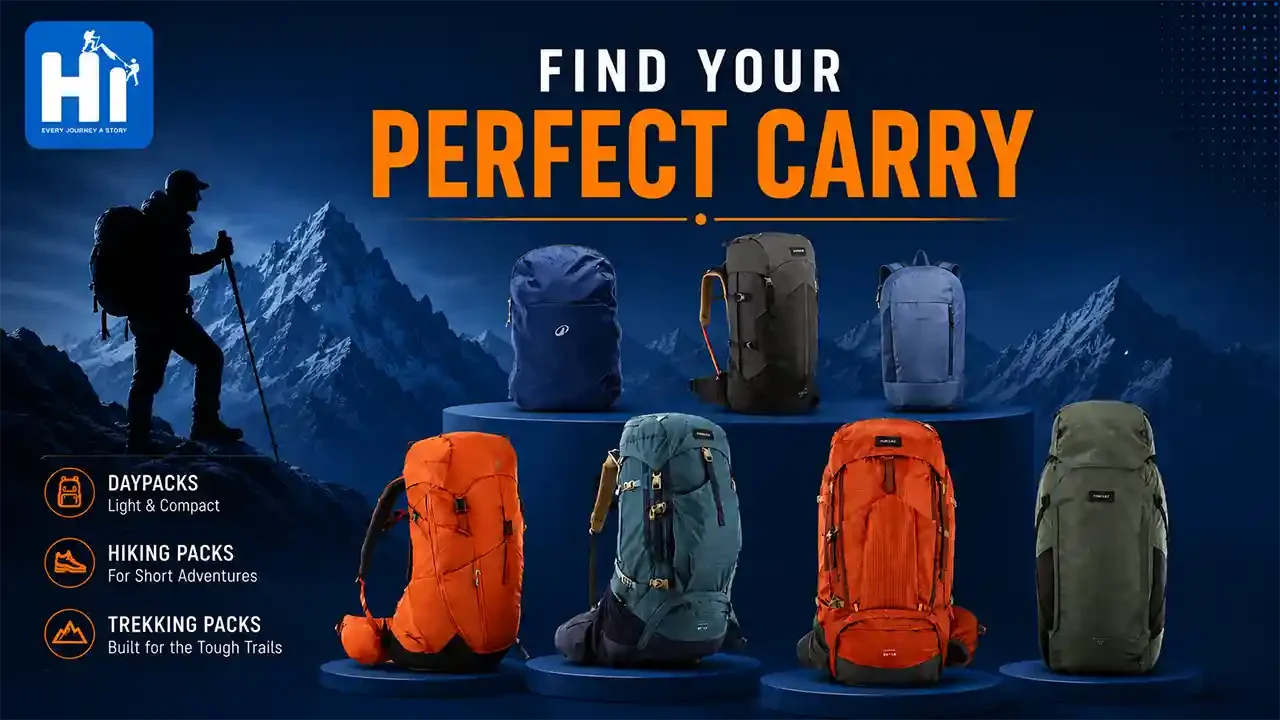

Buy the wrong backpack and you feel it in every single step of a multi-day trek. Capacity is where most people get it wrong, either squeezing a week’s gear into a 30L daypack because it looked “enough” in the shop, or hauling a 70L bag on a day hike that ends up three-quarters empty and still somehow uncomfortable.
If you are trekking with us, this decision is actually simpler than most guides make it sound. Your main kit travels by mule or porter, so what you are really choosing is a good Day Pack, big enough for water, layers, camera gear, and snacks, comfortable enough that you forget it is on your back by hour three.
That said, this guide covers more than just day packs. If you are planning a self-supported trek, whether that is an overnight without a porter or a full multi-day route carrying your own gear, the Hiking Pack and Trekking Pack sections below are exactly where you need to be looking.
Best Hiking & Trekking Backpacks
Day Packs (20-30L)
For most of our clients, the Day Pack is not one option among many, it is the only bag you will actually be wearing. Everything else travels by mule or porter, which means whatever you choose here has to work for six, seven, sometimes eight hours a day, every single day of the trek.
Somewhere between 20 and 30 litres is the sweet spot for most Himalayan day treks. Enough room for a rain layer, a light jacket for when the wind picks up near the top, your camera gear if you are carrying one, water, and snacks, without tempting you to overpack. Beyond that capacity, people tend to fill the space just because it is there, and end up carrying weight they did not need.
A day pack on the larger end of this range, say 28 to 30 litres, can even cover a weekend trek if you pack smart. Roll your clothes instead of folding them, skip the extra “just in case” layer, and a 2-day trip fits in the same bag you would carry for a single day out. It takes a bit more discipline while packing, but it means not buying a second bag just for occasional weekend trips.
What actually matters more than capacity is comfort over a full day, not for ten minutes in a shop. A breathable back panel keeps you from showing up at camp with a soaked shirt, a sternum strap keeps the bag from swinging on steep sections, and side pockets you can reach without taking the bag off save you from stopping every time you need water. This is the one piece of gear you genuinely will not think about while excited trekking, if you have picked the right one.
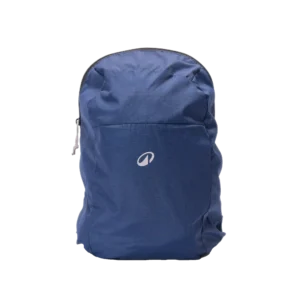
The NH Arpenaz 50 (10L) is the smallest option in this range, built for short outings where you genuinely just need water, a light jacket, and a few essentials, nothing more. Forest walks, coastal trails, gentle slopes, exactly the kind of trip where a bigger bag would just be dead weight on your back. Budget-friendly and no-frills, but know its limits, this is not the one to carry on anything longer than a half-day out.
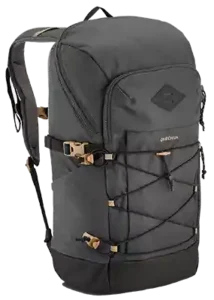
A solid pick for easier day treks and lower altitude trails. The multiple compartments keep snacks, rain layer, and camera gear separate instead of one jumbled sack, and the padded straps with ventilated back panel hold up well over a full day. Built to last, but save the steep, sustained high-altitude climbs for a pack higher up this page.
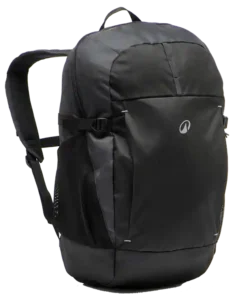
At 27L, this fits right where most day treks with us actually sit, enough room for layers, water, and snacks, without the extra bulk of a bigger bag you would not fill anyway. Built for lowland walks, forest trails, and gentle elevation gain rather than technical high-altitude routes, it is a simple, no-fuss companion for the kind of day where you just want to be out there without your bag getting in the way.
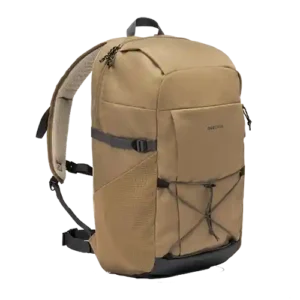
The NH Arpenaz 100 (30L) is built for casual outings, forest trails, coastal walks, occasional hikes where the terrain stays mostly even with just the odd uneven stretch. It comes with enough accessory points to strap on the extras without needing a separate pouch. A dependable everyday companion for lighter treks, not the one to reach for on a demanding high-altitude route.
Hiking Packs (35-50L)
This is the step up once you are carrying your own sleeping arrangement, even for just a night or two. A weekend trip without a porter, a self-supported overnight, or a trek where you want the flexibility of not depending on anyone else to carry your kit, this is the range built for that.
External straps or loops for a sleeping bag or a light tent matter here in a way they simply do not for a day pack, since you are unlikely to fit everything inside the main compartment alone. Torso support starts to matter too. At this weight, a bag that rides well on the hips rather than dragging on the shoulders makes a real difference by the end of day one.
Compression straps are worth checking for specifically. A 40L bag packed for one night looks very different from the same bag on the way back, and being able to cinch it down stops loose gear from shifting around and throwing off your balance on descents.
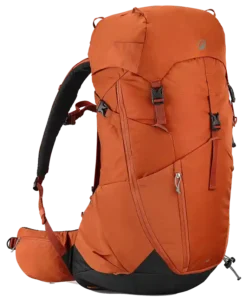
At 38L, this sits solidly in Hiking Pack territory, big enough for an overnight without a porter but not so large it becomes unwieldy on a weekend trip. It holds up on more than short trips too, I know guides who have carried this exact bag through multi-day treks like Hampta Pass, so if you would rather stick to one bag than buy separate gear for every trip length, this covers both. Full-length foam padding, from straps to belt, does real work shifting weight onto your hips instead of your shoulders, and the adjustable frame means you can dial in the fit at home rather than guessing your size online. Compartmentalised inside rather than one open sack, genuinely useful once you are packing for more than a single day.
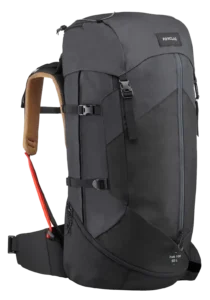
At 50L, this is built for actual multi-day self-supported treks, tent, sleeping bag, food, several days of gear, all in one bag. It carries the technical features that start to matter at this size, proper hip belt support, a frame that holds its shape when fully loaded, and enough structure that the weight does not just sag onto your shoulders by day two. If you are trekking independent of a porter for more than a night or two, this is the range to be looking at.
Trekking Packs (55-70L+)
This is for carrying everything, tent, sleeping bag, stove, several days of food, completely independent of any support crew. If you are planning a multi-day self-supported trek, this is not a category to save money on.
The hip belt is the single most important feature at this size. A properly loaded 60-65L pack should transfer most of its weight to your hips, not your shoulders, and a thin, unpadded hip belt will make itself known by day two regardless of how good the rest of the bag is. Torso length adjustability matters just as much, since you are wearing this for eight to ten hours a day across multiple days, and a bag that does not fit your specific torso length will never feel right no matter how well it is loaded.
An integrated rain cover is close to non-negotiable here, one less thing to buy separately and one less thing to forget. Also worth checking, the weight of the empty bag itself. Some frames add a genuine kilogram or more before you have packed a single item, which matters when every extra gram gets carried for days, not hours.
Not every trek needs the same carry though. Sometimes you want everything within reach, and sometimes you just want your cash and cards safe without the bulk. Here are two options depending on what you actually need.
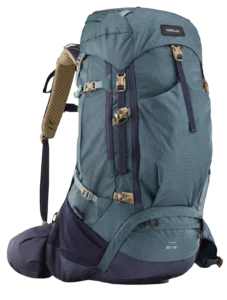
At 50L, extendable to 60L via the floating lid, this bag adjusts to the trek rather than the other way around. Pack it compressed for a shorter route, extend the collar when you need the extra room for a longer one, same bag either way. It is built as a genuine all-rounder rather than specialising in one type of trek, so if you want one pack that handles a range of multi-day conditions without overthinking the choice, this is a strong default pick.
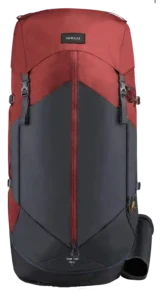
At 70L, this is at the upper end of what you would carry for an extended multi-day trek, full gear, several days of food, everything, with no porter support. Comfort still holds up at this size, which matters since a bag this loaded is unforgiving if the fit is off. If your trek stretches beyond what a 50-60L bag comfortably handles, this is where you land.
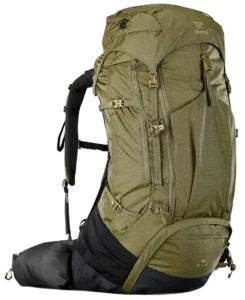
At 60L, extendable to 70L via the floating lid, this sits comfortably in extended multi-day trek territory. I own this one myself, in orange, bought it for ₹8,999 at the time, and price has gone up since then. Pricing is not always a perfect indicator, but a backpack that keeps getting more expensive rather than discounted is usually a decent sign it is holding up and selling well, not something Decathlon needs to push with a discount. Add the taut mesh back and polyamide build to that, and this is a bag I would point people toward without much hesitation.
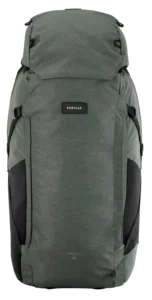
The detachable 6L pouch is the standout feature here, pull it off for a quick day out from base camp or a town stop, while the main 70L body stays packed and untouched at camp. The reinforced build leans more travel-ready than trek-specific, useful if this bag doubles up for more than just the mountains. The full back-panel opening also means you can reach everything inside directly, instead of digging from the top down every time you need something buried at the bottom.
Features That Actually Matter
- Back panel ventilation – the difference between a dry shirt and a soaked one by lunchtime
- Hip belt padding – becomes critical above 40L, since this is where most of the weight should sit
- Adjustable harness/torso system – since you cannot try it on before buying, this lets you fine-tune the fit at home instead of guessing right the first time
- Rain cover – built-in saves a step, but a separate one works just as well if it fits
- Compression straps – keeps a partially packed bag from shifting and throwing off balance
Common Mistakes to Avoid
- Buying based on litres alone without checking the listed height range or whether the back system is adjustable
- Choosing a bigger bag “just in case” and overpacking to fill the space
- Ignoring the hip belt on anything above 35-40L
- Skipping a rain cover to save a few hundred rupees, then losing a lot more to wet gear
- Not checking the exchange or return window before ordering, since fit cannot be tested in advance, this is your actual safety net, not a backup plan
Still not sure which backpack fits your trek?
Every trail and every trekker is different. Connect with us on WhatsApp and we will help you pick the right size and features for your specific trek.
Chat With Us on WhatsApp
This page contains affiliate links. If you purchase through them, we may earn a small commission at no extra cost to you.